Japan's government earthquake research committee sorts the country's major active fault zones by one number: the probability that the fault produces an earthquake within the next thirty years. The scale published in the current assessment, dated 1 January 2026, runs in four steps.
- S — 3 percent or higher. There are 32 of these nationally. - A — 0.1 percent up to 3 percent. - Z — under 0.1 percent. - X — not known.
Inside the top band there is a further mark, S\*, for faults that have already used up 70 percent or more of their average interval since the last earthquake — in other words, ones judged to be late in their cycle. Hokkaido's Kuromatsunai Lowland and Sarobetsu fault zones carry it, as do the Shinjo Basin and Yamagata Basin zones in Yamagata prefecture. The expected magnitudes attached to those four run from about M7.1 to about M7.6, with average intervals from roughly 2,500 years to more than 8,000.
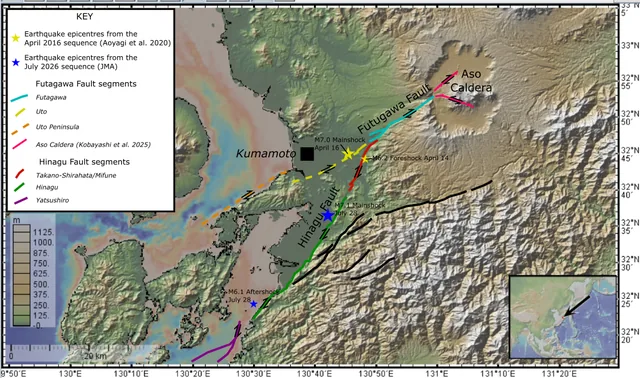
The committee attaches a warning to its own table, and it is the part worth reading twice. A low rank is not a promise. Immediately before the 1995 Kobe earthquake the probability on that fault stood somewhere between 0.02 and 8 percent. Before the 2016 Kumamoto earthquake it was between almost zero and 0.9 percent. Strong shaking is possible anywhere regardless of which band a nearby fault falls in.
Why it is on the board
It was the sixth most-read story on TBS in Japan on Monday. The list itself is not new — it is a standing government assessment, republished. What moved it up the most-read column was a week of earthquake coverage, and readers going to look up their own prefecture.
확인: TBS · 地震調査研究推進本部