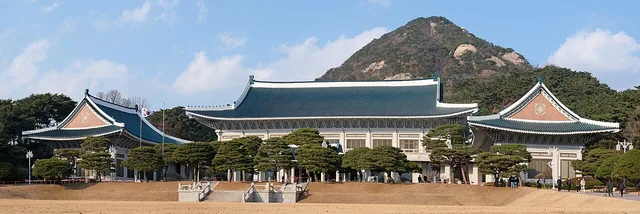
The government will spend 43.3 trillion won on youth policy next year, up 53.5 percent from this year's 28.2 trillion, and it said so before the budget bill itself — at an event in the presidential office on the 28th that it called an unboxing. Presenting the budget to the public ahead of the bill is a first, the office says.
The figure being quoted back is a different one: up to 195.82 million won per person by the age of 34. It carries three conditions. The recipient has to be born in a designated regional priority area, be a first child, and come from a household at 100 percent of the median income standard. Meet all three and the government's estimate is 140.57 million won by 18 and about 195.82 million by 34. Drop the conditions and it is a different sentence.
The case the government makes for the money is two numbers. The population of people in their twenties and thirties recorded as "resting" — neither working nor looking — was 651,000 last month, 240,000 more than in July 2016. And the asset gap between older and younger households widened from 2.4 times in 2012 to 3.9 times in 2024.
What the money buys is spread across a life rather than a category: a K-New Deal academy for 50,000 people, a first-career project for 60,000 university students, 7.2 million won a year to small and mid-sized firms for each young hire, regional talent scholarships going from 4,000 recipients to 10,000, and more than half of a new universal public rental housing programme reserved for young people.
One detail of the event was not about money. The officials who designed the programmes presented them, rather than ministers. "When people like me or the prime minister do it, it doesn't go well," the president said. "There's nothing to be done about the difference in years."
뉴스프리존 sets out what is not settled: whether the spending is sustainable over that horizon, whether the same person can draw on several of these at once, and whether any of it converts into young people supporting themselves. What matters, it argues, is not the 43.3 trillion.
뉴스1 attaches a reason to the timing — that support among people in their twenties and thirties has been sliding and this is an attempt to turn it. That is the reporter's reading; the piece carries no polling figure.
Why it is on the board
Top of the Korean reading list when we collected, carried by 뉴스1.
Ten of the thirty Korean items are current affairs at all, and three of those ten are the Nepal disaster — a twelve-year-old EBS film warning of a glacial flood, watched three million times in a day; a headline putting the toll near 600 dead and 2,500 missing; and the families of Koreans among the missing, saying that forty-eight hours in, the search has still not started.
확인: 뉴스1 · EBN · 뉴스프리존