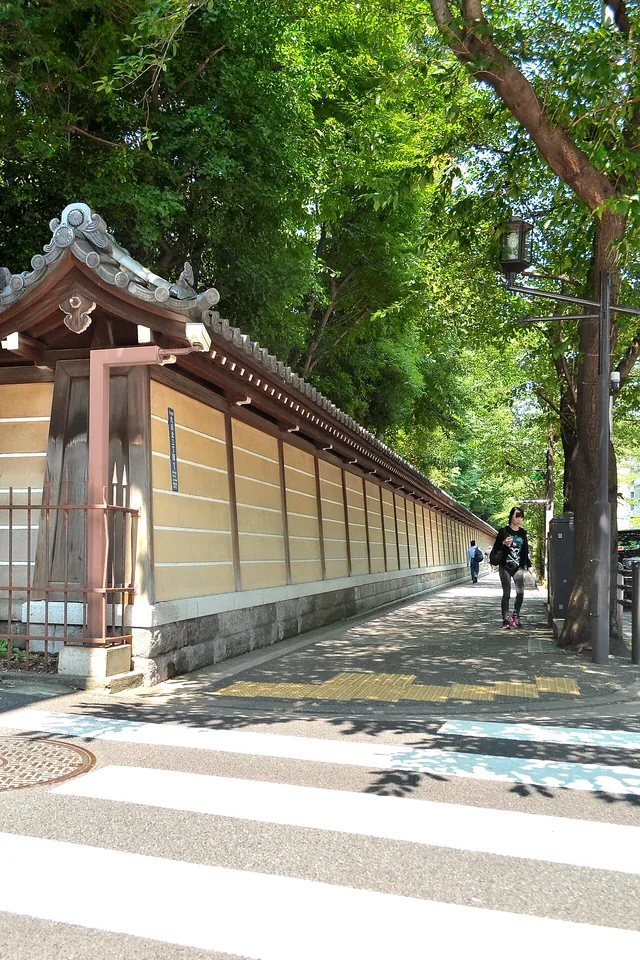
At the Chinese foreign ministry's regular press conference on 17 August, a Xinhua reporter asked about the address Japanese Prime Minister Takaichi Sanae had given two days earlier at the National Memorial Service for the War Dead. In his answer, spokesperson Lin Jian said that on the day of Japan's surrender Takaichi sent a ritual offering to the "war criminals' shrine", and that Defence Minister Koizumi Shinjiro and other senior officials and politicians went there to pay their respects.
The name Yasukuni does not appear anywhere in that answer.
Two days earlier the same ministry had put it a different way. Its statement of 15 August named the shrine twice, and then said that the shrine — where fourteen Class-A war criminals are enshrined — is "in fact" a war criminals' shrine. That is a characterisation attached to a name. On 17 August the characterisation was used instead of the name.
The phrase itself is not new. On 21 April a foreign ministry spokesperson, Guo Jiakun, had already said that Yasukuni is in fact a "war criminals' shrine". What changed on 17 August is that the first half of the sentence was dropped.
The rest of the 17 August answer stayed on the memorial address. Lin said Takaichi had avoided the words "reflection" and "lessons" and had blurred responsibility for the war of aggression, and he pointed to the calendar: this year is the 81st since victory in the war against Japan and the 80th since the Tokyo Trials opened.
Part of the criticism in the answer was attributed to Japanese voices. People of insight inside Japan, Lin said, have pointed out that a country which does not reflect cannot be trusted, and that the defence minister's conduct amounts to support for a war of aggression.
The 15 August statement had been the procedural one. China said it strongly condemned the shrine offerings and visits and had lodged representations and a strong protest with Japan. That statement was issued on the anniversary of Japan's surrender, the day Takaichi sent the offering and members of her cabinet went to the shrine.
Why it is on the board
It reached #11 on Weibo's hot search list and #14 on Baidu's, which is what brought it onto this board. Note what the search term was. It was not the protest and not the visits — the phrase people were searching was that the foreign ministry had stopped saying Yasukuni and was calling it the war criminals' shrine directly.
Japan sits elsewhere on this board today with a story about its own visitor numbers, in which arrivals from China fell by half.
확인: 中国外交部 · 中新网