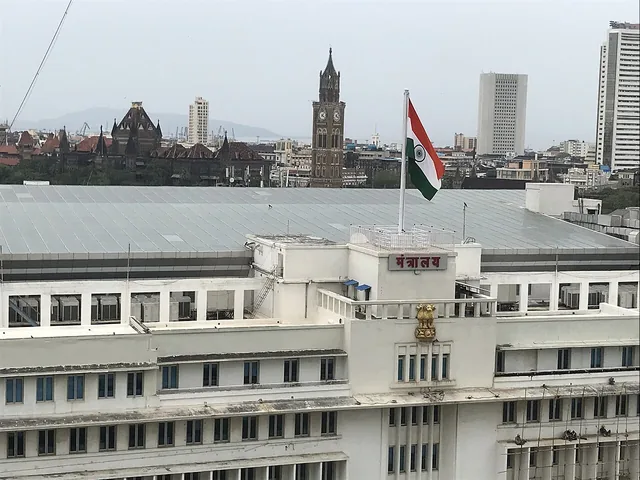
Maharashtra's food regulator banned the sale of loose edible oil across the state on 20 August, requiring that oil be sold only in sealed, tamper-evident, properly labelled food-grade packaging. On Monday the 24th the chief minister, Devendra Fadnavis, stepped in and told the regulator to write a standard operating procedure instead.
What moved him was raised at his own cabinet meeting. Several ministers, The Indian Express reports, objected that the order would hit traders and consumers, particularly in rural areas where packaged oil is not readily available. Oil traders had already objected that the restrictions threatened family businesses that have run for generations. Afterwards Fadnavis said the regulator, led by Tukaram Mundhe, would be directed to find "a middle path" — an SOP that keeps the oil free of adulteration "without forcing these businesses to shut down."
The order it replaces was not written vaguely. Business Today lists what inspectors had found: operating without valid licences, blending in cheaper undeclared oils, oil over the acid-value and trans-fat limits, unauthorised blending of mustard oil, relabelling, repackaging oil close to expiry, and packaging not approved for food. Containers had been reused after holding mineral oil, lubricants, paint or chemicals. Loose oil, the commissioner argued, carries no batch number or source, so nothing can be traced back. The order covered seven common oils — groundnut, mustard, sunflower, rice bran, palm, coconut and maize — in a state with 212 centrally licensed edible oil producers and 285 licensed by the state.
The two accounts do not agree on what the order was. The Indian Express treats it as a new blanket ban announced this month. Business Today quotes Mundhe reminding retailers that selling loose edible oil was already prohibited — in his telling the order enforces a rule that existed, as the 100-percent-purity requirement for mustard oil has since 8 June 2021.
Why it is on the board
Second on The Indian Express's most-read list when we collected. It is a one-lens entry: the Indian video lens returned nothing this round, and the collector recorded two channels as blocked, so that zero is not silence.
The Indian list we held ran to thirty items, fifteen from each of the two outlets we read. Four of the Times of India's fifteen open with a year — 1959, 2014, 1867, the 1930s — and are explanatory pieces rather than the day's news.
확인: The Indian Express · Business Today