Klaus-Michael Kühne died in the night into Monday at Schindellegi in Switzerland, where he had lived since the 1960s. He was 89. Der Spiegel reports the news first reached manager magazin from people around the family — he had come back from Mallorca about ten days earlier, already worse and under medical care — and that his company then confirmed it. ZDFheute has the company's own statement: the board chairman of Kühne+Nagel International, Jörg Wolle, called him a visionary and a great entrepreneur, and the chief executive, Stefan Paul, said he stood for logistics and global trade like no one else.
He was born in Hamburg in 1937 and joined the family freight firm that his grandfather had co-founded in 1890, building the business from 1958 onwards and becoming chairman young. Kühne+Nagel describes itself as one of the world's leading logistics providers, with around 88,000 staff at more than 1,300 sites in 100 countries. In 2009 he bought into the shipping line Hapag-Lloyd to keep it from being sold to Asian investors. Over the past five years his holding company kept adding: stakes in the chemicals logistics group Brenntag, in the bus and rail operator Flixbus, and in Lufthansa, where he was a major shareholder.
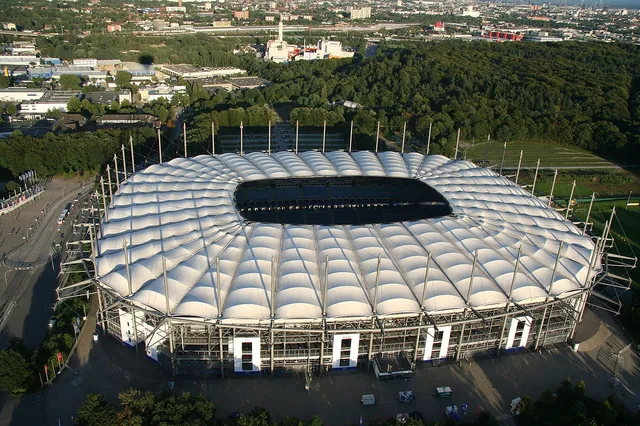
The other half of his public life was a football club. He put money into Hamburger SV repeatedly and pulled it back from financial trouble more than once, bought shares, secured the stadium naming rights so the ground could be called the Volksparkstadion again, and intervened in how the club was run on and off the pitch. ZDF puts the total at around 100 million euros over the years and his holding at one point above 20 percent of the club's spun-off football company; Der Spiegel describes the support in figures larger than that. The club's statement used the initials it used internally: KMK was there for HSV whenever it needed him.
On what he was worth, the two accounts cite different tallies. Der Spiegel says that on the Handelsblatt's reckoning he was the second-richest German after the Kaufland founder Dieter Schwarz, and that manager magazin's annual list last put his fortune at about 23.5 billion euros. ZDF says only that he was one of the richest Germans.
He is survived by his wife Christine, whom he married in 1989. They had no children, and Der Spiegel reports the fortune is to pass to the Kühne Foundation, set up in 1976, which works in logistics, climate, medicine and culture and describes itself as one of the largest of its kind in Europe. ZDF reports he had put a billion euros into Hamburg by 2018 alone. Among the last things he pushed for in the city was a new opera house; he was also involved in the Elbtower, the tower project that collapsed spectacularly.
Why it is on the board
Top of Der Spiegel's most-read list when we collected, also on n-tv's, with a clip in the German video lens — three lenses.
The two accounts are built for different readers and it shows in what they confirm. Der Spiegel reports through the business press — manager magazin's sourcing, the Handelsblatt's ranking, the holding company's purchases — and ends on a question it had put to him last year about whether he was trying to buy his birthplace's affection. ZDF leads with the company's statement, the club, and the foundation.
확인: Der Spiegel · ZDFheute