Judge Indira Talwani blocked the Postal Service's mail-ballot regulation on Thursday, a day after she had vacated her own nationwide injunction against the executive order that regulation implements. The two decisions are not a contradiction so much as a sequence, and the sequence runs through the Supreme Court's order on Monday.
That order lifted an injunction in a related case on the ground that the states had sued too early — before the agencies had settled how they would carry the executive order out. Talwani, who is hearing both cases, concluded on Wednesday that the same reasoning required her to reconsider the nationwide injunction she had issued earlier this month, and she vacated it in a nine-page order. The Postal Service had said it would not apply its rule to the 2026 elections unless both injunctions were lifted. That condition was met.
Then the plaintiffs removed the reason. Voting-rights groups amended their complaint to reflect that a final rule had now been published, which is the thing the courts had said was missing, and Democratic-led states filed a new suit. On Thursday Talwani found the plaintiffs likely to succeed on the merits and blocked the regulation, in the case brought by the League of Women Voters and others and in the one brought by the states. Part of the executive order stays blocked for at least fourteen days.
What she wrote is more specific than the procedural ruling that preceded it. The president, she held, cannot insert the federal government into elections without express authorisation from Congress. The administration, she noted, had offered no evidence at all regarding fraudulent absentee or mail-in voting; the government's interest in correcting an unsubstantiated problem through likely unconstitutional means, she wrote, is dwarfed by the overwhelming risk of pervasive disenfranchisement. And on timing: states have neither the time nor the funds to update election management systems and train staff, which makes compliance before the midterms practically impossible.
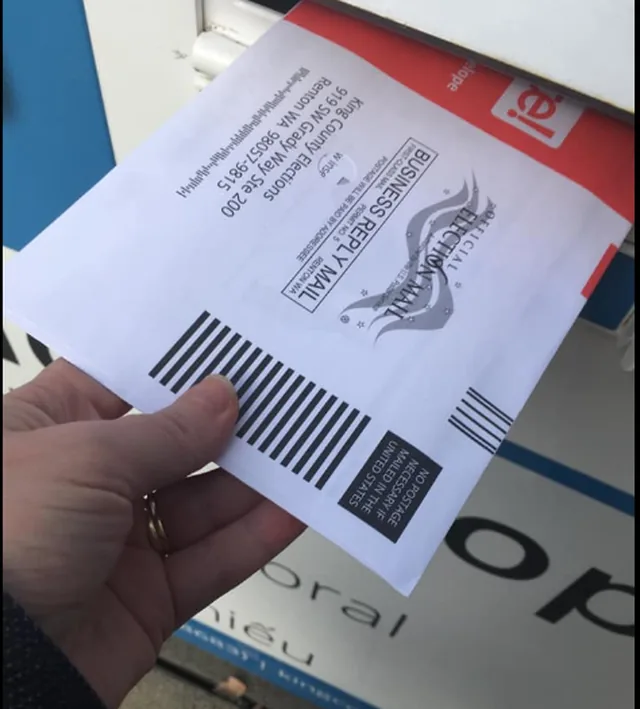
The rule itself requires states to hand over lists of mail voters and to use federally reviewed ballot envelopes carrying unique barcodes, with the Postal Service able to refuse mailings that do not comply. About 30 percent of voters cast ballots by mail in 2024, according to the states challenging the policy; a Pew Research Center survey after that election found 44 percent of Democratic voters said they had voted by mail or absentee, against 26 percent of Republicans.
One piece of the order is untouched by all of this. The provision directing the Department of Homeland Security to compile lists of eligible voters and send them to the states remains in effect.
Why it is on the board
Fourth on NBC News's most-read list when we collected and twenty-fourth on the New York Times's.
The two accounts we hold were written a day apart and read as opposites until you put them in order. CNBC has Wednesday: the injunction lifted, the Postal Service free to move, the new suits filed the same day. NBC News has Thursday: the block restored, and the first ruling in this run that says anything about whether the policy is lawful.
확인: NBC News · CNBC